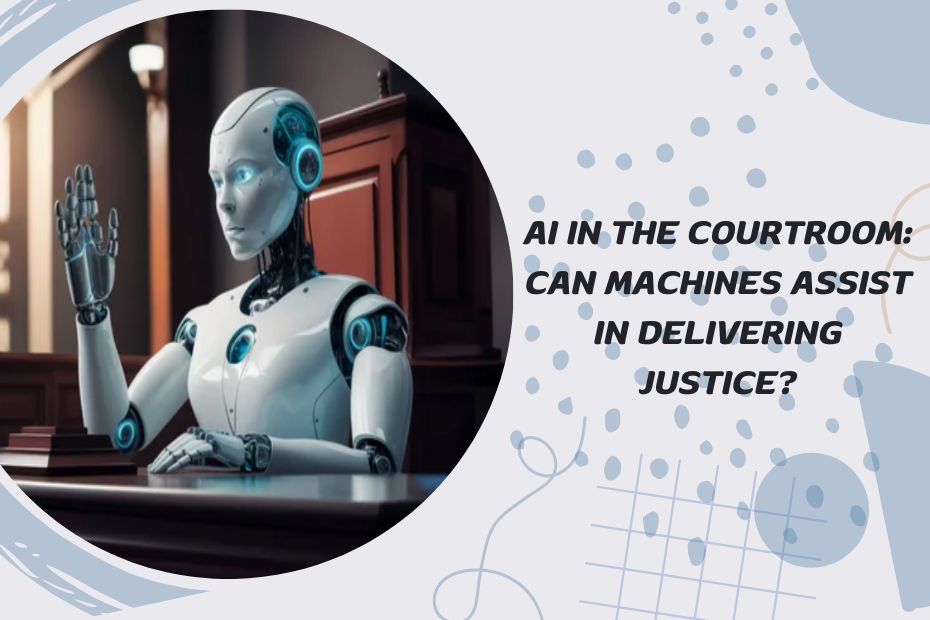
Artificial Intelligence (AI) is increasingly making its way into courtrooms, raising questions about how it can assist in delivering justice. As courts adapt to technological advancements, AI has the potential to make judicial processes more efficient, but it also brings challenges that need careful consideration. Here, I’ll explore how AI is reshaping courtrooms, the opportunities it presents, and the obstacles courts must address to effectively integrate AI into the justice system.
AI for Judicial Decision-Making
One of the most discussed applications of AI in courtrooms is its potential to aid in judicial decision-making. AI systems can analyze case law, predict possible outcomes based on historical data, and offer recommendations for judges. In countries like Australia, AI has already been used experimentally to help judges make property settlements in family law cases. The “Split-Up” system, for example, uses neural networks to predict the fair distribution of assets in divorce cases, assisting judges with their decisions by providing data-driven suggestions based on multiple factors like contributions and future needs.
While AI can support decision-making, it is not seen as a replacement for judges. Chief Justice Roberts has noted that, while AI might significantly impact the legal field, it cannot replace the nuanced decision-making capabilities that human judges bring, which require a deep understanding of context, empathy, and moral considerations.
AI-Driven Legal Assistance for Litigants
AI is also playing a role in helping self-represented litigants navigate complex legal systems. Tools like chatbots and virtual assistants can provide individuals with information on how to proceed with their cases, answer questions about court procedures, and help draft documents. For instance, in Florida, the Eleventh Judicial Circuit uses “SANDI” (Self-Help Assistant Navigator for Digital Interactions) to guide pro se litigants through civil cases, reducing the need for human intervention and providing assistance in multiple languages, including English and Spanish.
This type of technology is particularly useful for improving access to justice, especially for those who cannot afford a lawyer. AI tools can offer guided support for drafting court documents and understanding procedural requirements, empowering litigants who otherwise might struggle to access legal services.
AI for Courtroom Efficiency
AI is increasingly being utilized to make courtroom operations more efficient. AI-driven transcription tools can replace human stenographers, converting spoken words into text in real-time during court proceedings. This technology speeds up the process of creating official transcripts and makes these records available almost immediately after hearings. In addition, AI can assist with translation, helping non-English speakers participate fully in court processes by providing real-time translation services. This is crucial in areas like California, where language barriers often limit access to justice for diverse populations.
Despite the promise of efficiency, there are concerns about relying on AI transcription and translation. Issues related to accuracy, especially in understanding complex legal jargon or emotional nuance, remain challenging. Human oversight is necessary to ensure the transcripts and translations are correct and fair.
Predictive Analytics and Case Management
AI’s predictive analytics capabilities can provide valuable insights for managing case outcomes. Machine learning models can analyze case data to predict how a judge might rule based on similar past cases. This is particularly useful in helping lawyers decide whether to settle or proceed to trial. By providing a data-driven assessment of likely outcomes, AI can assist attorneys and litigants in making informed decisions, potentially reducing unnecessary litigation and streamlining case resolutions.
Court leaders are also exploring how predictive tools could improve case management by prioritizing cases that need immediate attention or identifying trends in dockets. AI can assist in classifying case dockets and understanding the chronological events within a case, which helps court staff work more efficiently.
Enhancing Access to Justice
One of the most promising areas where AI can make a significant impact is in enhancing access to justice for underrepresented populations. AI tools like “Cleo,” a chatbot used in Maricopa County, Arizona, help manage routine queries from the public, addressing issues like scheduling and basic legal information. This helps reduce the burden on court staff and ensures that people can get the assistance they need without delays.
Moreover, AI-driven tools can bridge the gap in access to legal help for those unable to afford traditional legal services. By providing basic legal guidance and drafting support, AI democratizes access to the legal system, especially in high-frequency, low-complexity matters like small claims or eviction cases.
Ethical Concerns with AI in Courtrooms
Despite the numerous benefits AI brings to courtrooms, its integration also presents ethical challenges. Concerns have been raised about potential biases in AI models that might influence decisions, particularly if the training data reflects historical inequalities. The risk of AI “hallucinating” (generating incorrect information confidently) is another factor that requires vigilance, as this could have serious consequences in a courtroom setting.
Ensuring fairness in AI decision-making is crucial, and many legal professionals advocate for continuous human oversight to validate AI-generated outputs. The legal community, including organizations like the Stanford Justice Innovation Lab, is working towards developing ethical standards and protocols to guide the responsible use of AI in courtrooms.
AI’s Impact on Legal Jobs and Court Structures
AI’s increasing role in the legal system is changing how courtrooms and law firms operate. Automation of routine tasks such as transcription, translation, and document analysis is reducing the workload on human staff, which is especially important given the staffing shortages many courts are anticipating in the coming years. However, this shift also raises concerns about job displacement, particularly for support staff like stenographers and court clerks.
On the positive side, freeing up time from repetitive tasks allows legal professionals to focus more on complex and strategic aspects of their work. It can also create opportunities for upskilling staff to manage and work alongside these AI tools, contributing to a more technologically proficient legal workforce.
Key Roles of AI in the Courtroom
- Supports judges by analyzing case data and suggesting outcomes.
- Improves access to justice for self-represented litigants.
- Automates transcription and translation for better efficiency.
- Uses predictive analytics for effective case management.
In Conclusion
AI is reshaping the courtroom by making judicial processes more efficient, enhancing access to justice, and supporting legal professionals in decision-making. While it holds the promise of revolutionizing the legal system, it also presents challenges that require careful management, particularly around ethical concerns and job displacement. The future of AI in courtrooms lies in striking a balance—using AI to assist rather than replace the critical human elements of the justice system. With proper oversight, AI can become an invaluable tool for making justice more accessible, timely, and fair.